Against the backdrop of the national “Dual‑Carbon” strategy and the upgraded comprehensive management of river‑lake basins, the development model of traditional hydraulic projects — which prioritize flood control over ecology and feature high‑energy consumption — can hardly meet the requirements of green and low‑carbon development. River basin governance in the new era lays greater emphasis on low‑carbon construction, ecological restoration, intensive utilization of water resources and long‑term improvement of water environment. With core strengths including low‑carbon footprint, flexibility, eco‑compatibility and energy‑saving performance, eco‑friendly rubber dams have become a preferred facility for small‑and‑medium river regulation, river‑basin ecological restoration and green water conservancy development. They drive river‑basin governance toward carbon‑neutral, high‑quality and sustainable transformation in an all‑round manner.
Compared with conventional concrete sluice‑dams, eco‑friendly rubber dams deliver outstanding low‑carbon and energy‑reduction performance throughout their whole life cycle. Traditional sluice‑dams require massive earthwork and large‑volume building materials. The production and pouring of raw materials such as cement and sand generate substantial carbon emissions; besides, long construction periods cause severe disturbance to original river‑channel ecosystems. In contrast, eco‑friendly rubber dams involve less civil‑engineering work, simplified construction procedures and fast on‑site installation, which greatly shorten construction schedules and cut energy consumption and carbon emissions during construction. Equipped with intelligent inflation‑deflation regulation systems, these dams consume very little energy in daily operation, a sharp contrast to the high‑energy‑intensity operation mode of conventional sluices. Moreover, their main components are recyclable and reusable, complying with the philosophy of circular economy. They realize green and low‑carbon performance covering construction, operation and decommissioning, and address the long‑standing challenge of high carbon footprint and high resource consumption in traditional hydraulic engineering.
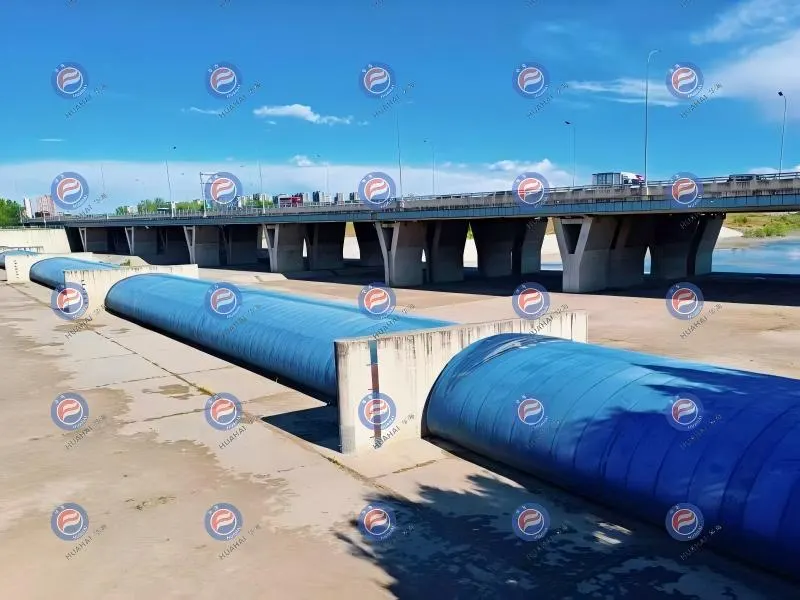
In terms of river‑basin ecological restoration, the flexible and adjustable features of rubber dams bring remarkable ecological benefits. Rigid conventional sluice‑dams break hydrological connectivity of river courses, block migration passages for aquatic organisms and disrupt natural aquatic ecological rhythms. Eco‑friendly rubber dams, however, enable flexible regulation in response to seasonal variations and water‑level changes. In dry seasons, inflated dam bodies store water, raise river‑channel water levels and stabilize water‑surface areas. They continuously guarantee ecological base flow, prevent river desiccation and soil‑water loss, and effectively improve water environment in dry seasons. During flood seasons, dams can be fully deflated and laid flat on riverbeds without occupying flood‑discharge cross‑sections or hindering the downstream transport of floodwater and sediment. Natural flood‑control and sediment‑transport functions of rivers are fully preserved. Unobstructed and connected water systems protect habitats of aquatic flora and fauna, restore biodiversity and rebuild healthy and natural river ecosystems.
Meanwhile, rubber dams enable scientific optimization of water‑resource regulation and continuously enhance the self‑purification capacity of river‑basin water environments. Through segmented water retention and graded water control, they effectively extend water residence time for natural purification, accelerate natural degradation of water pollutants, mitigate eutrophication load and steadily improve river water quality. Stable water surfaces help recharge groundwater and regulate local microclimate, increasing the ecological carbon‑sink capacity of river basins and facilitating regional carbon‑neutrality goals. Integrating flood control & drainage, ecological water storage, water‑quality purification and riparian landscape functions, a single rubber dam can replace multiple separate hydraulic facilities. It saves land resources and capital investment and avoids extra resource consumption and carbon emissions caused by repeated construction. The solution achieves in‑depth integration of ecological, social and economic benefits and provides solid hydraulic support for low‑carbon river‑basin governance and ecological upgrading.

Address: No.555 Yueyahe Road, Huangdao District, Qingdao, China
TEL:Rubber Dam & Spillway Gate; Oil Spill Recovery Equipment +8653288139929
FAX:0086-532-88139937
E-mail:sale@huahai-online.com

 鲁公网安备 37021102000487号 Support | Newview