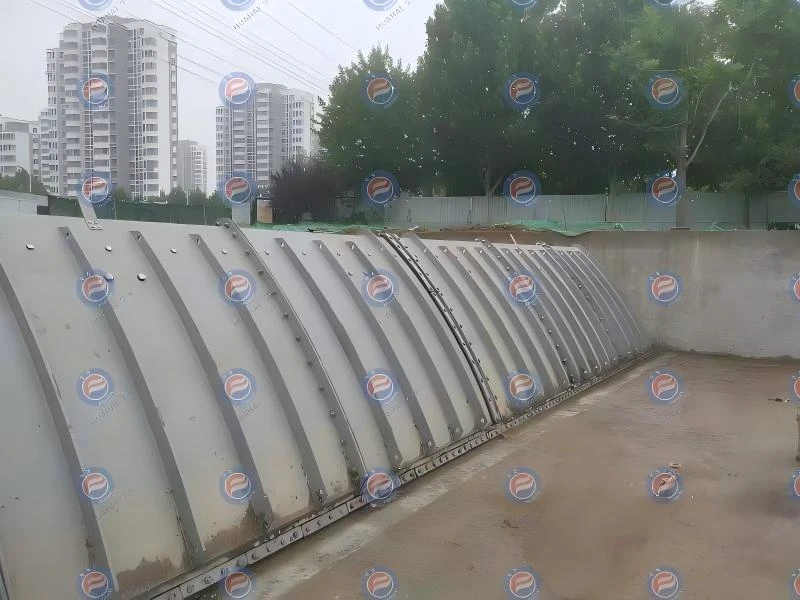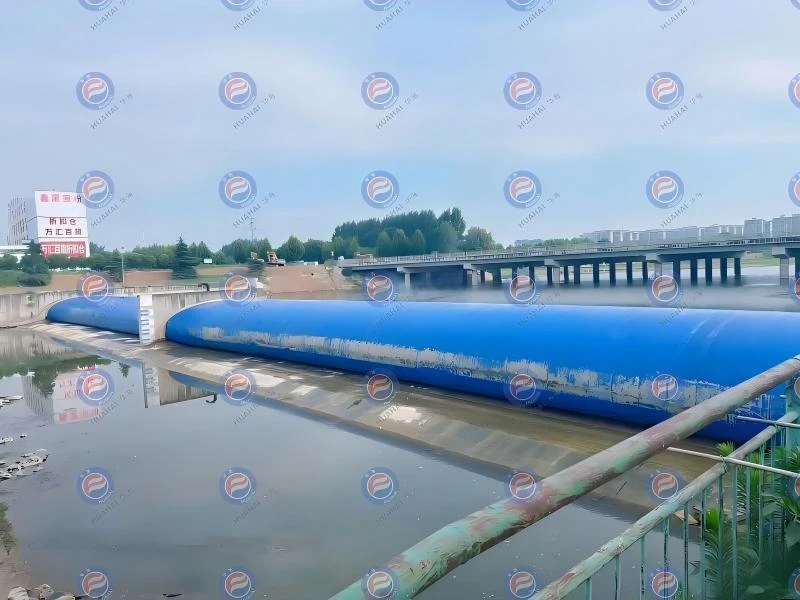
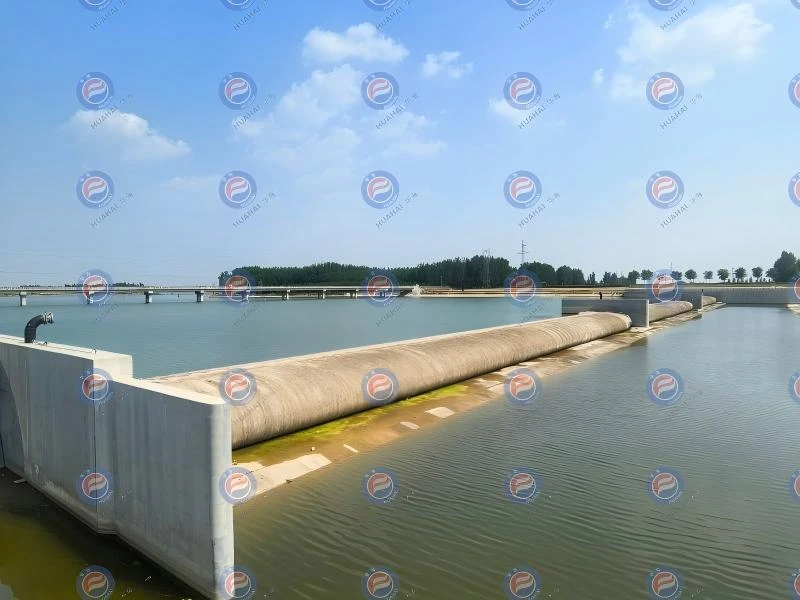
Rubber dams are widely used in river water storage, ecological management and flood control regulation projects. Long-term operation is prone to air and water leakage of dam bags, which impairs water storage efficiency and engineering safety. Drawing on years of operation and maintenance experience of rubber dam projects, Huahai Environmental Protection has compiled simple and efficient leakage inspection and on-site repair schemes in accordance with industry specifications, helping operation and maintenance units quickly address equipment faults.
First, accurately identify actual leakage and rule out normal pressure fluctuations caused by thermal expansion and cold contraction due to temperature changes. On-site inspection follows the principle of starting with simple checks before complex ones. High-risk leakage points are mainly located in anchorage systems, pipeline flanges, dam bag splicing seams and worn areas of the dam body.
Simple and accurate leakage location methods can be adopted for daily inspection:
For inflatable rubber dams: Soap bubble leakage detection is the primary method. Apply foamy water, and bubbles will form at leakage points.
For concealed water-filled leakage: Fluorescent tracing method can be used. Underwater blind zones can be inspected with camera equipment.
After emptying the dam body, pinholes, scratches, aging cracks and other damages on the dam bag can be visually inspected.
Common faults can be repaired rapidly by classification:
Anchorage leakage: Mostly caused by loose bolts and aging gaskets. Solutions include retightening bolts, replacing sealing parts and polishing pressing plates.
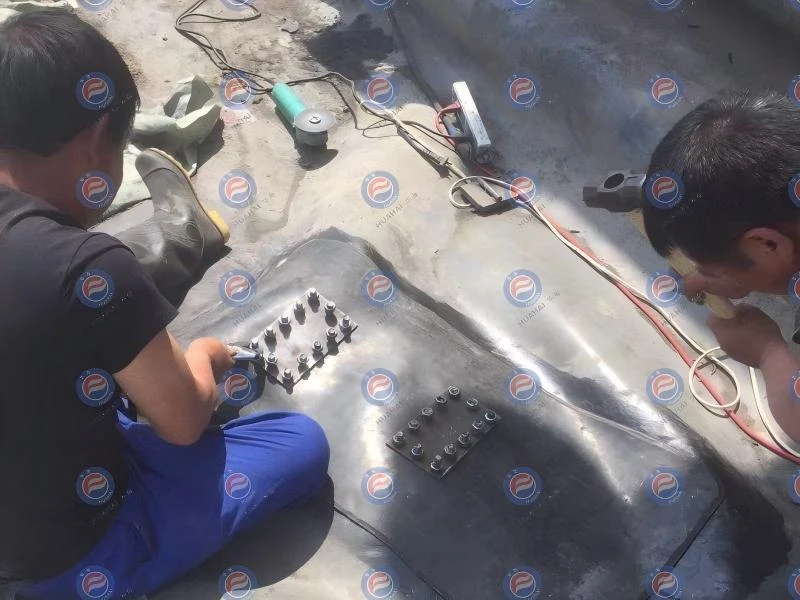
Splicing seam leakage: Clean and polish the debonded areas, then paste special reinforcing adhesive tape for cold bonding and curing.
Dam bag body damage: Tiny holes are repaired via cold bonding; medium and small damages can be temporarily blocked with clamping plates; partially replacing the dam bag is required for large-area aging and tearing.
Pipeline flange leakage: Replace aged gaskets and fasten fittings.
Huahai Environmental Protection reminds that the base surface must be dry and clean during rubber dam repair, and a pressure holding test must be conducted for acceptance after repair. Regular patrol inspections and fitting tightening as well as advance leakage detection should be carried out daily to fix minor faults early, effectively extending the service life of the dam body and ensuring stable operation of the project.
Address: No.555 Yueyahe Road, Huangdao District, Qingdao, China
TEL:Rubber Dam & Spillway Gate; Oil Spill Recovery Equipment +8653288139929
FAX:0086-532-88139937
E-mail:sale@huahai-online.com

 鲁公网安备 37021102000487号 Support | Newview