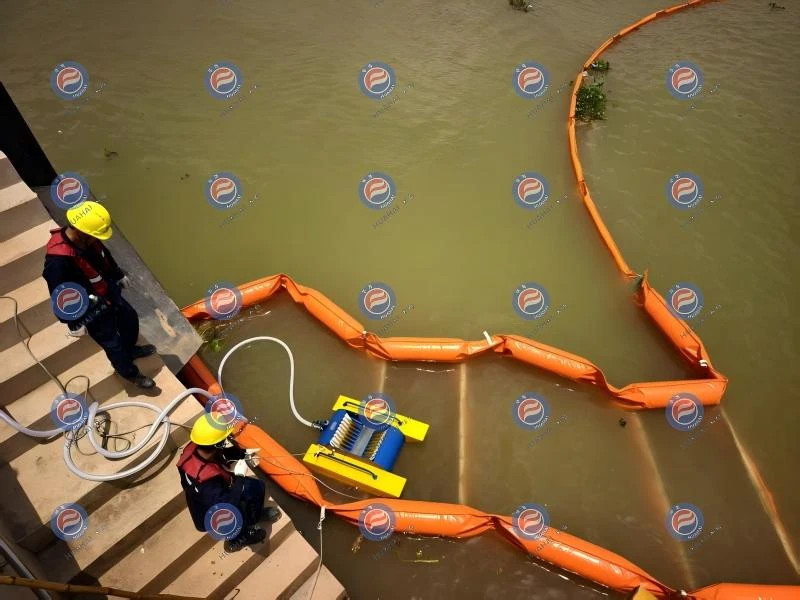
No.1 Rubber dams are not made of "pure rubber".
Many people think rubber dams are made purely of rubber, but in fact, their dam bags are composite products of synthetic rubber and fiber fabric.The core load-bearing layer is made of high-strength polyester canvas or nylon canvas, acting like the "skeleton" of the dam bag, responsible for bearing water pressure and impact force. The outer layer is covered with aging-resistant and wear-resistant synthetic rubber (such as chloroprene rubber and EPDM rubber), which provides waterproofing, UV resistance and corrosion protection. This composite material makes rubber dams both lightweight and tough. For example, Huahai Rubber Dam uses high-strength, water-resistant nylon 66 canvas as the load-bearing skeleton, with aging-resistant synthetic rubber vulcanized on both the inner and outer sides as the water-stop layer and protective layer.
No.2 The two forms—inflatable (air-filled) and water-filled—each have their unique advantages.
Rubber dams are divided into two types: inflatable (air-filled) and water-filled, with very different applicable scenarios.
Water-filled rubber dams use water as the medium. Their advantages include lower cost, convenient maintenance, and gentler water flow in case of dam failure, resulting in high safety. They are suitable for areas with abundant water resources.
Inflatable rubber dams use air as the medium. They feature fast inflation and deflation (taking only 1–2 hours to inflate a medium-sized dam), are less prone to freezing in winter, and can be completely collapsed during dry seasons without affecting river navigation and sediment discharge. They are mostly used in cold northern regions or navigable rivers.
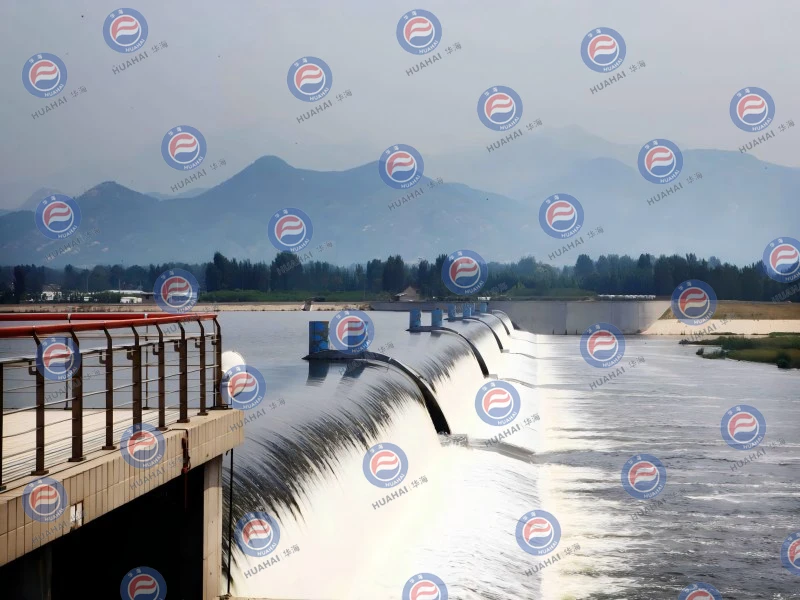
Figure 1 shows a water-filled rubber dam of a project undertaken by Qingdao Huahai Environmental Protection Industry Co., Ltd.
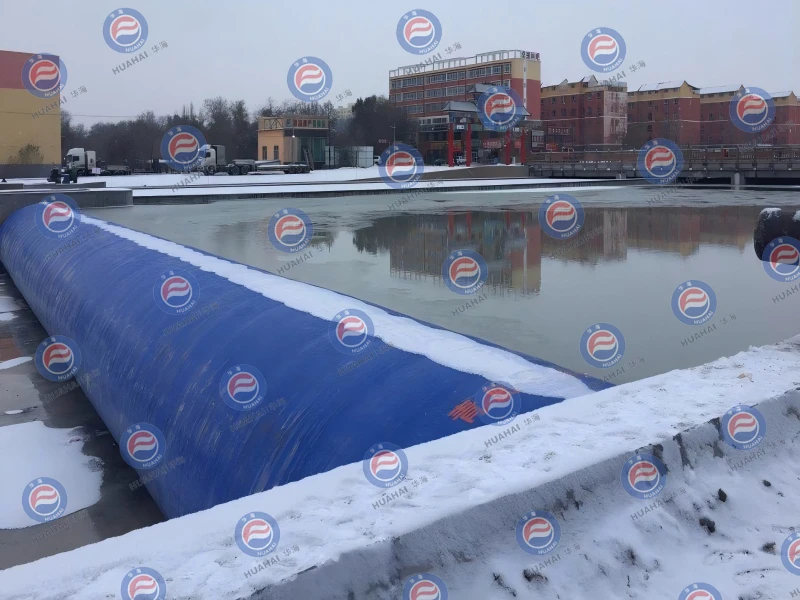
Figure 2 shows an inflatable rubber dam from a project constructed by Qingdao Huahai Environmental Protection Industry Co., Ltd.
No.3 The earliest rubber dam was invented in the United States, but it was greatly developed and popularized in Japan.
The world's first rubber dam was built in 1957 on the Los Angeles River in the United States. It stood 1.5 meters high and 15 meters long, using neoprene as the material.
However, it was Japan that truly popularized rubber dam technology. After constructing its first rubber dam in 1965, Japan rapidly promoted the application of rubber dams due to its small land area, short and rapid rivers, and high demand for flexible water conservancy projects.
By the 1980s, Japan accounted for more than 70% of the world's total number of rubber dams. It also developed various new structures, such as multi-span continuous dams and foldable rubber dams.
No.4 An Emergency Flood Control Expert That Can "Disappear Quickly"
One of the most unique advantages of rubber dams is their ability to collapse rapidly for flood discharge. During floods, simply opening the water (or air) drainage valves allows the dam bag to deflate and lie flat on the riverbed within minutes to hours, enabling unobstructed flood passage and avoiding the risk of dam failure. This “deployable when needed, collapsible during floods” characteristic makes them flexible guardians for flood control in small and medium-sized rivers.
NO.5 Its service life far exceeds people’s common perception of rubber products.
Many people worry that rubber dams will age easily like ordinary rubber products. In fact, with normal maintenance, the service life of rubber dams can reach 15–20 years.Key maintenance measures include:regularly inspecting the dam bag for damage, promptly removing attached floating debris to avoid abrasion, emptying water-filled dam bags in winter to prevent freezing and expansion, and carrying out partial repairs on aging areas.
For example, the Linyi Taoyuan Rubber Dam, constructed by Qingdao Huahai Environmental Protection Industry Co., Ltd. in 2005, had its dam bag replaced in 2020 and has been operating well ever since.
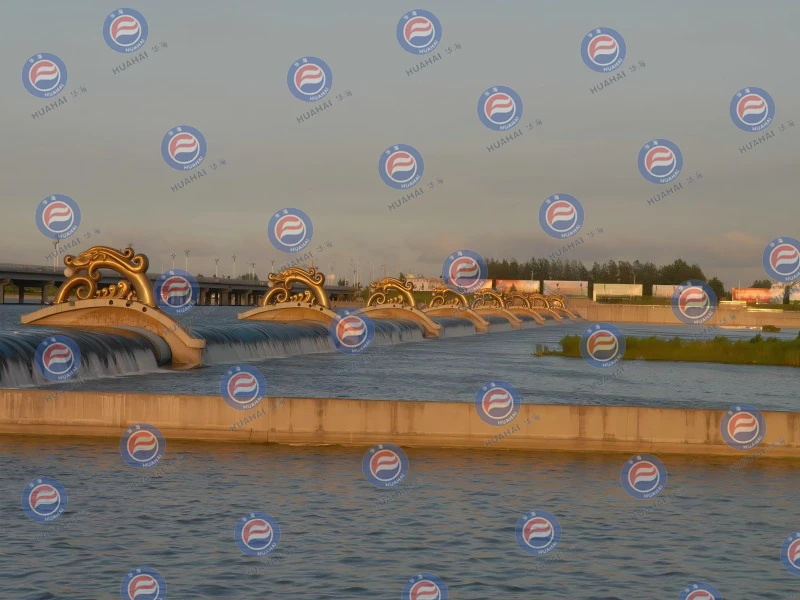
Figure 3 shows the Taoyuan Rubber Dam in Linyi, Shandong, constructed by Qingdao Huahai Environmental Protection Industry Co., Ltd. in 2005.
NO.6 Not only does it retain water, but it also creates landscapes and generates electricity.
The functions of rubber dams go far beyond water retaining and irrigation. In urban landscapes, they are often used to create artificial waterfalls and lake scenes. In small hydropower stations, rubber dams can serve as low-head water-retaining structures to generate electricity in conjunction with hydro-generator units, making them particularly suitable for small and medium-sized rivers with a water head of 3–5 meters, featuring low investment and quick results. In addition, rubber dams can improve river ecology by adjusting water levels to provide suitable habitats for fish.
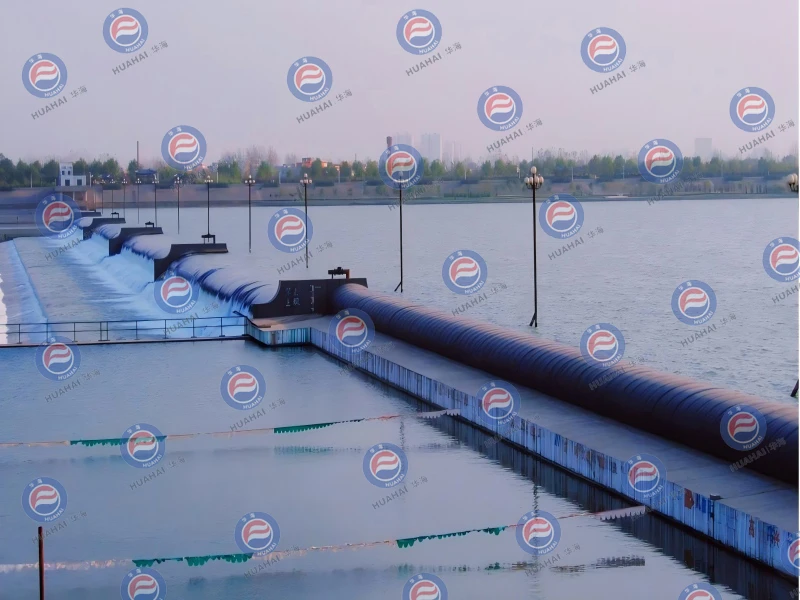
Figure 4 shows a landscape rubber dam constructed by Qingdao Huahai Environmental Protection Industry Co., Ltd.
Address: No.555 Yueyahe Road, Huangdao District, Qingdao, China
TEL:Rubber Dam & Spillway Gate; Oil Spill Recovery Equipment +8653288139929
FAX:0086-532-88139937
E-mail:sale@huahai-online.com

 鲁公网安备 37021102000487号 Support | Newview